Vita Onlife · Nutrition and allergy apps
Connect health tasks while keeping two apps independently usable.
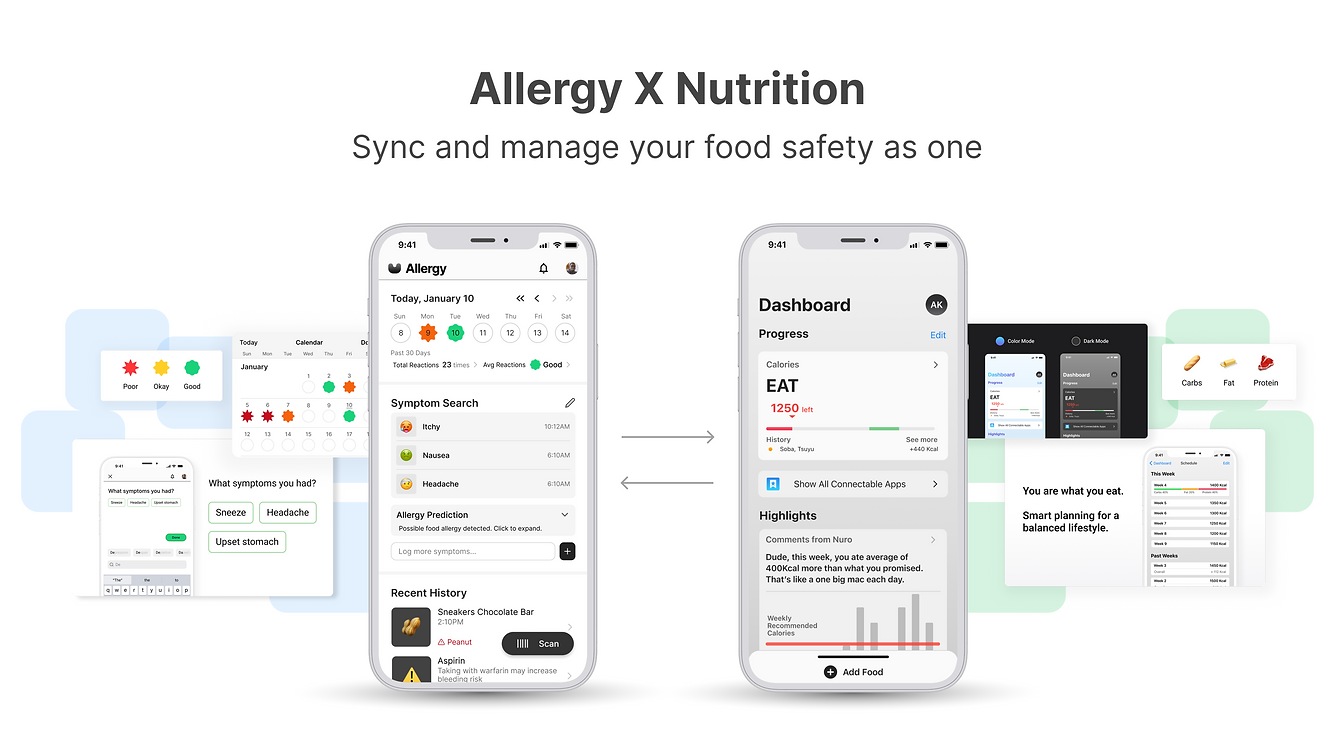
Original case artifact; authorship confirmed by Yejun Tak.
Nutrition was designed over four Agile weeks. An Allergy app was requested midway, with a two-to-three-week handoff target to UCF developer interns.
Preserve each app’s structure and connect data through Connection App. Prioritize UX structure so engineering can begin before visual refinement finishes.
The source reports behavior testing in Nutrition sprint three but supplies no sample, method, or numeric results. Allergy alerts and insights are designed flows, not proven prevention or clinical validation.
Context, role and late Allergy requirement
Vita Onlife provides a suite of connected health apps. I designed Nutrition over four Agile weeks as Design Lead.
Midway through Nutrition, the product manager requested a standalone Allergy app that would integrate naturally with Nutrition. The requested handoff target for UCF developer interns was two to three weeks.
The challenge was to balance app independence with a coherent ecosystem. I prioritized core UX structure so development could begin early, then refined visual details.
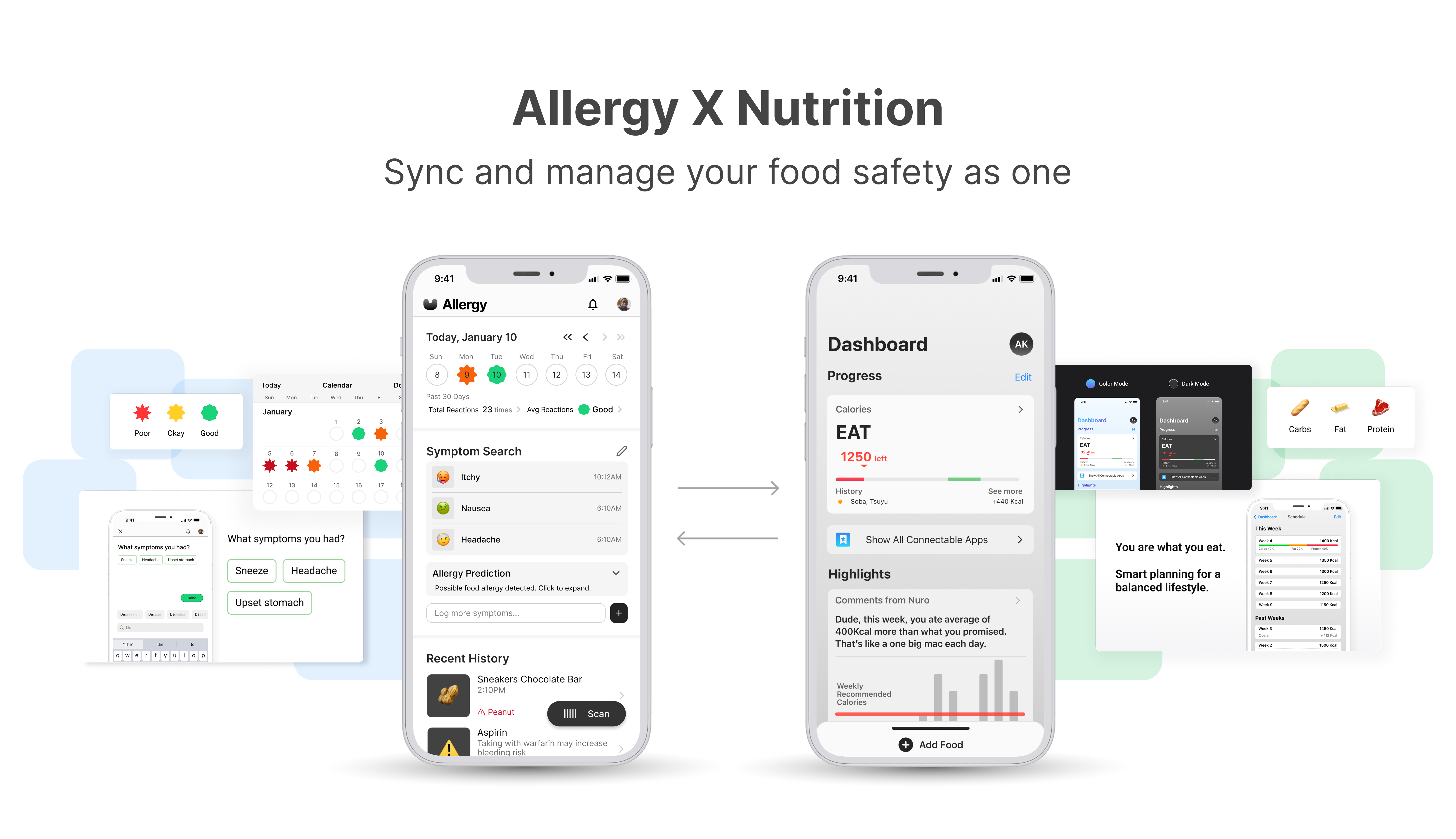
Design process
Nutrition used four sprints; Allergy used four phases. The original process diagram is preserved.
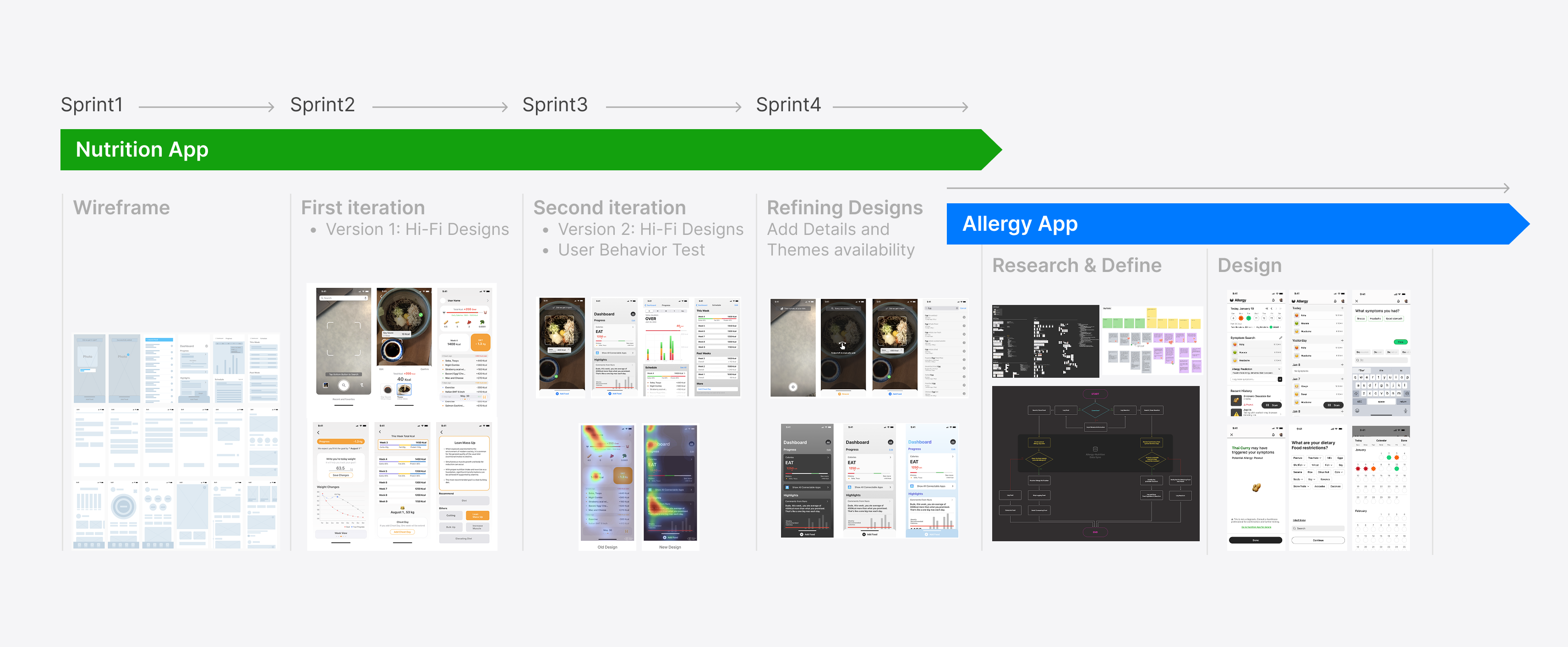
Nutrition: four sprints
Sprint 1: feature structure, information architecture and wireframes.
Sprint 2: first high-fidelity designs for core features.
Sprint 3: information structure and visual emphasis refined using user behavior testing described in the source. No test sample, method or numeric results are provided.
Sprint 4: detailed refinement and both dark and light themes.
Allergy: four phases
Phase 1: references and competitor apps informed feature direction.
Phase 2: key features and structure considered future integration.
Phase 3: user flow and task flow organization.
Phase 4: high-fidelity designs and UI system.
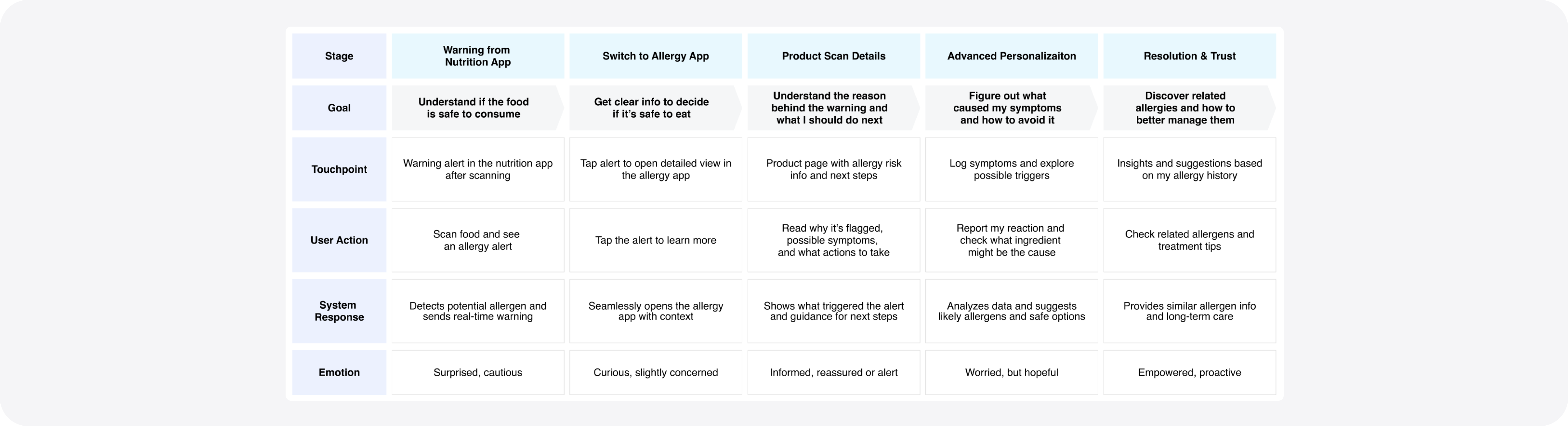
MVP features and user stories
Source-described competitive analysis and user research informed user stories and two key functionalities per app.
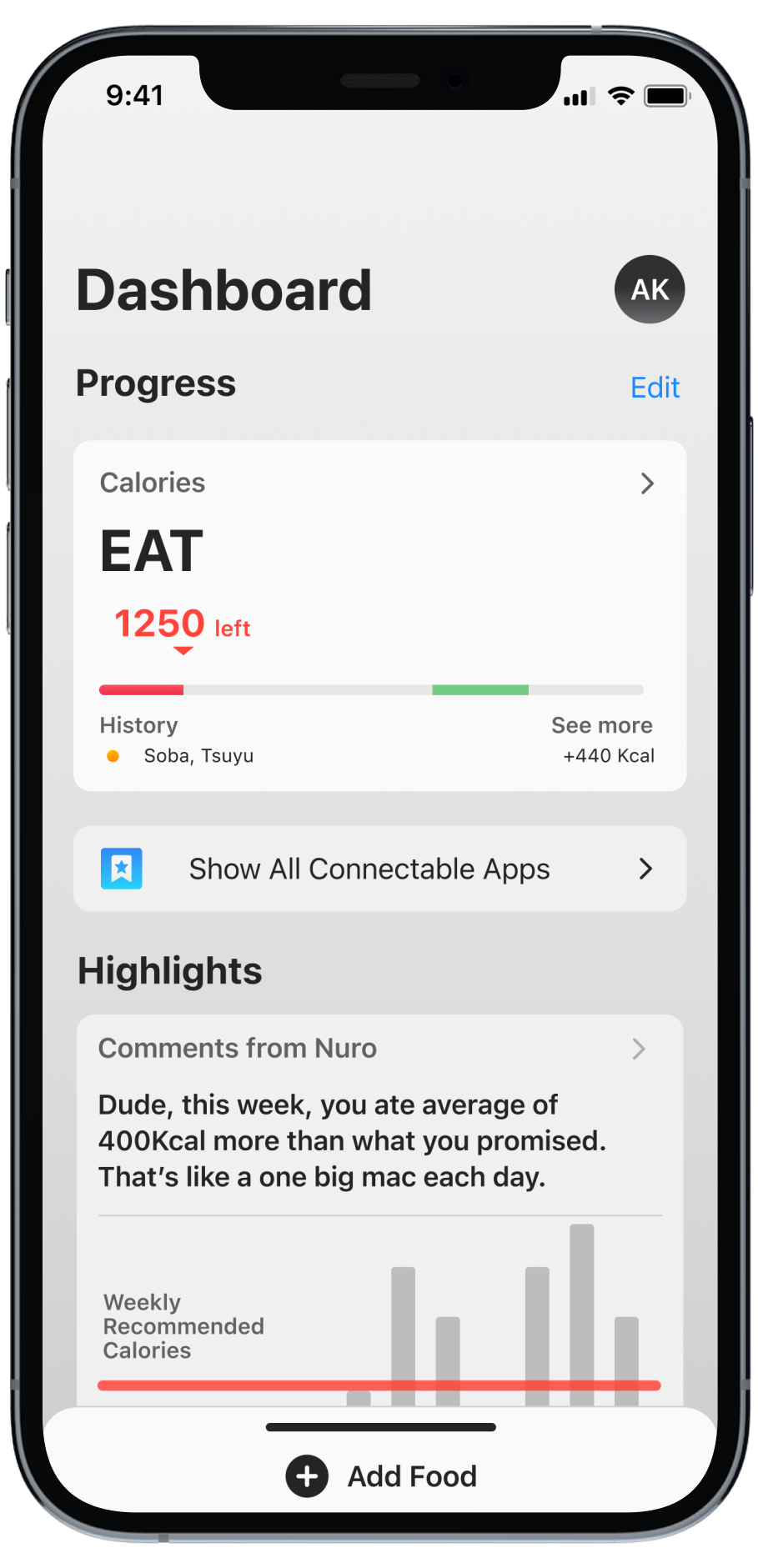
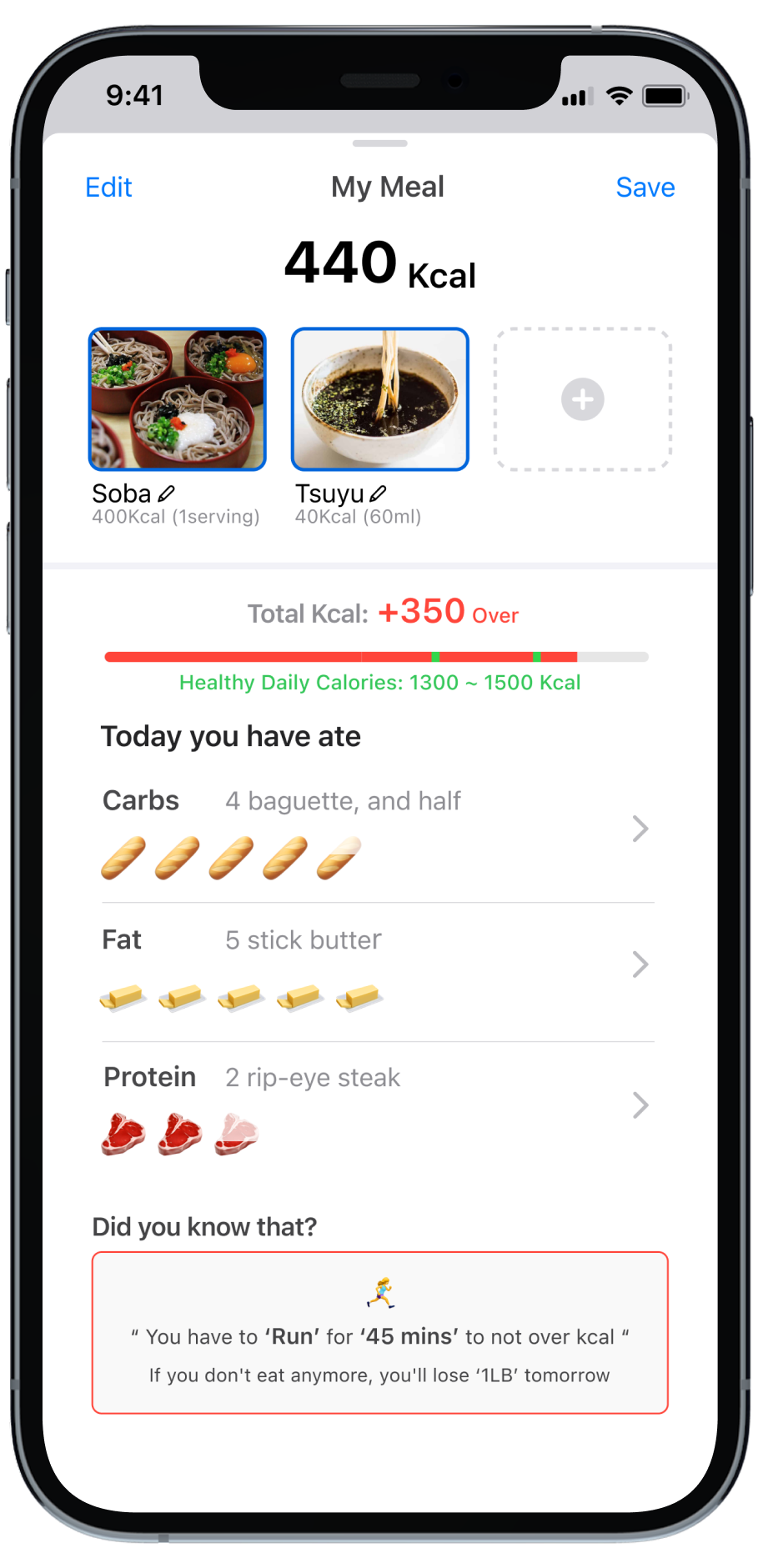
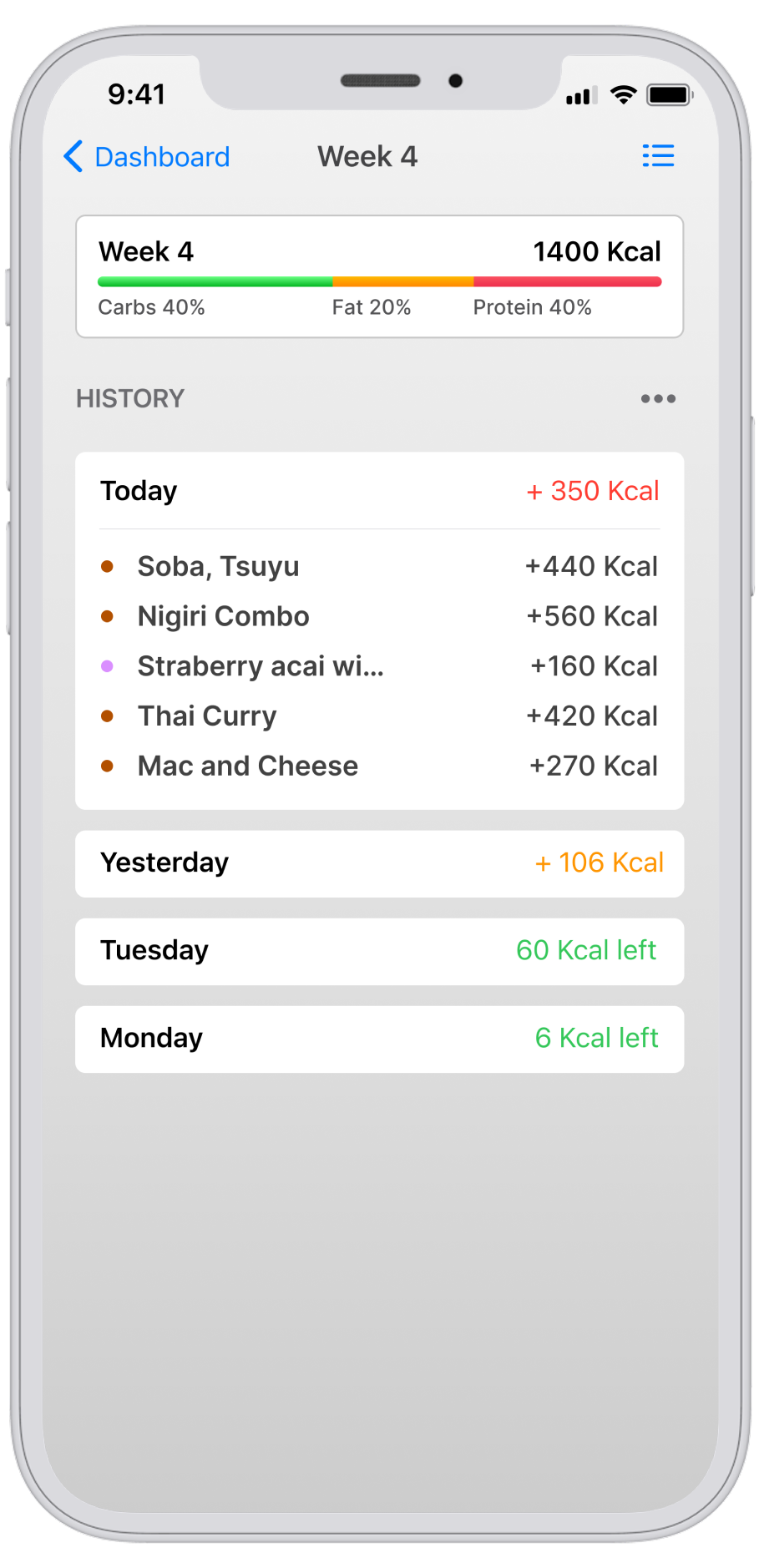
Nutrition: food intake logging and tracking; a designed allergy-alert flow drawing on records from the connected Allergy app.
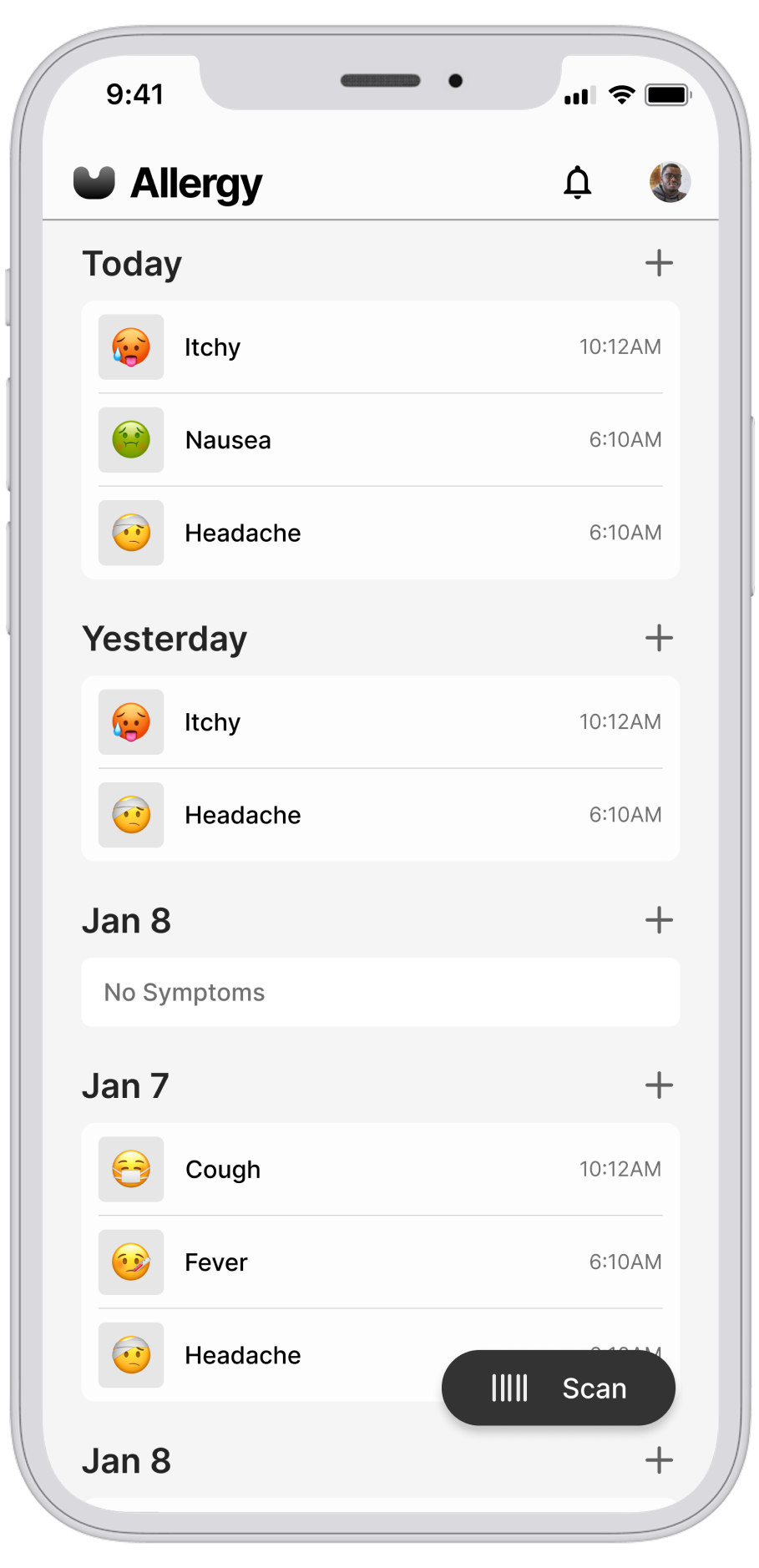
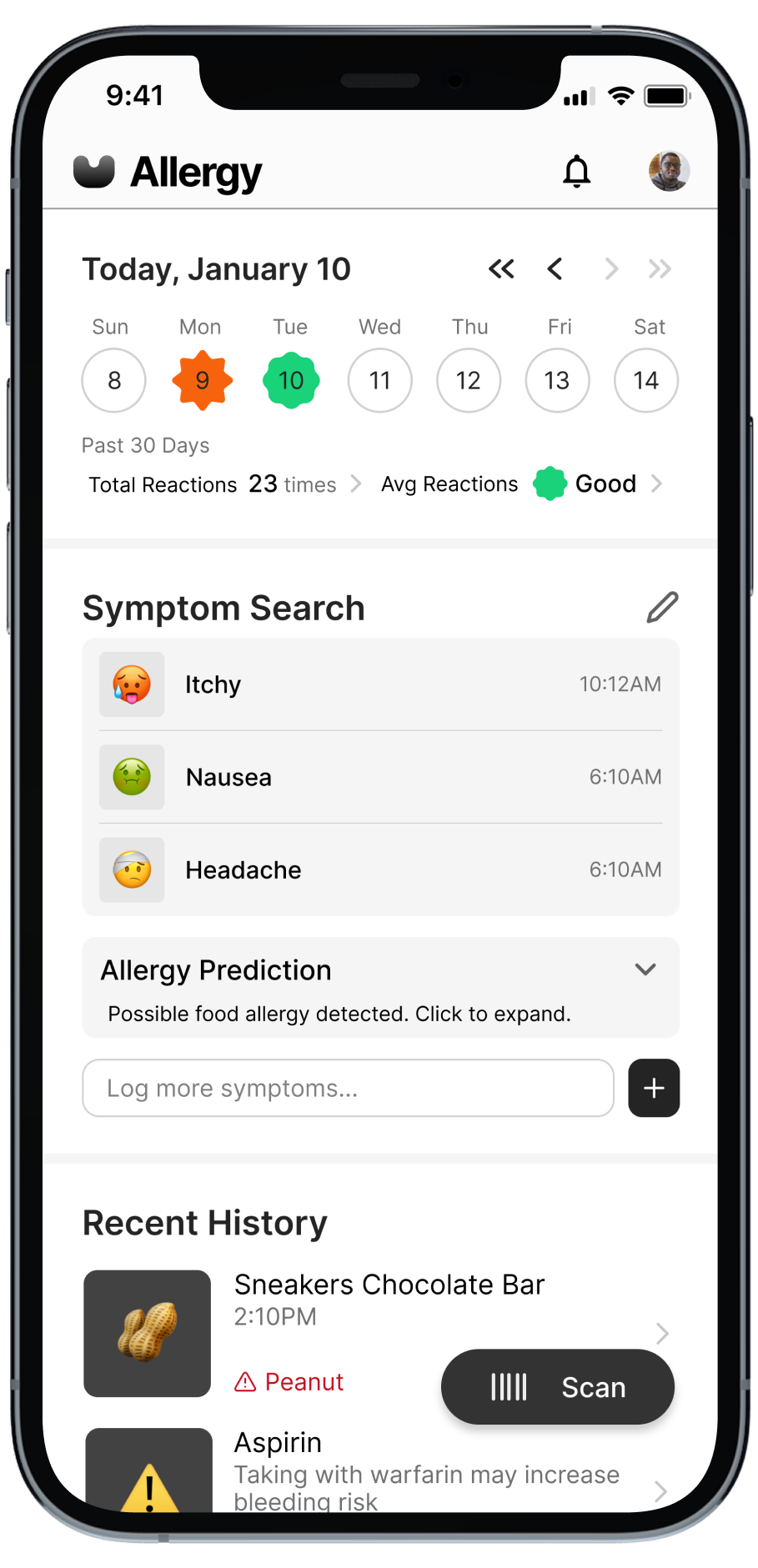
Allergy: reaction logging and tracking; a designed flow comparing symptoms with logged meal data. These are proposed functionality and design intent, not clinically validated detection or prevention.
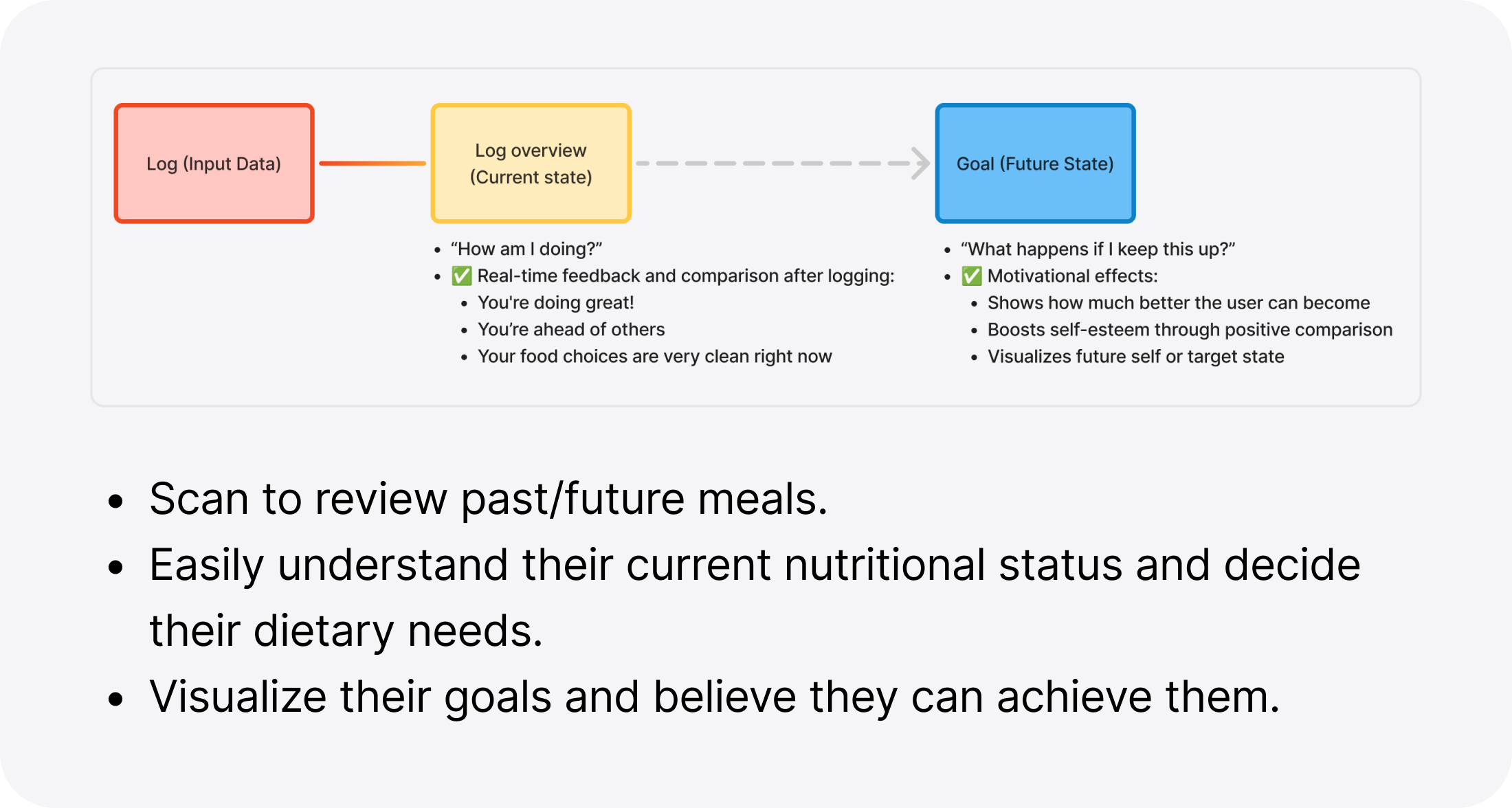
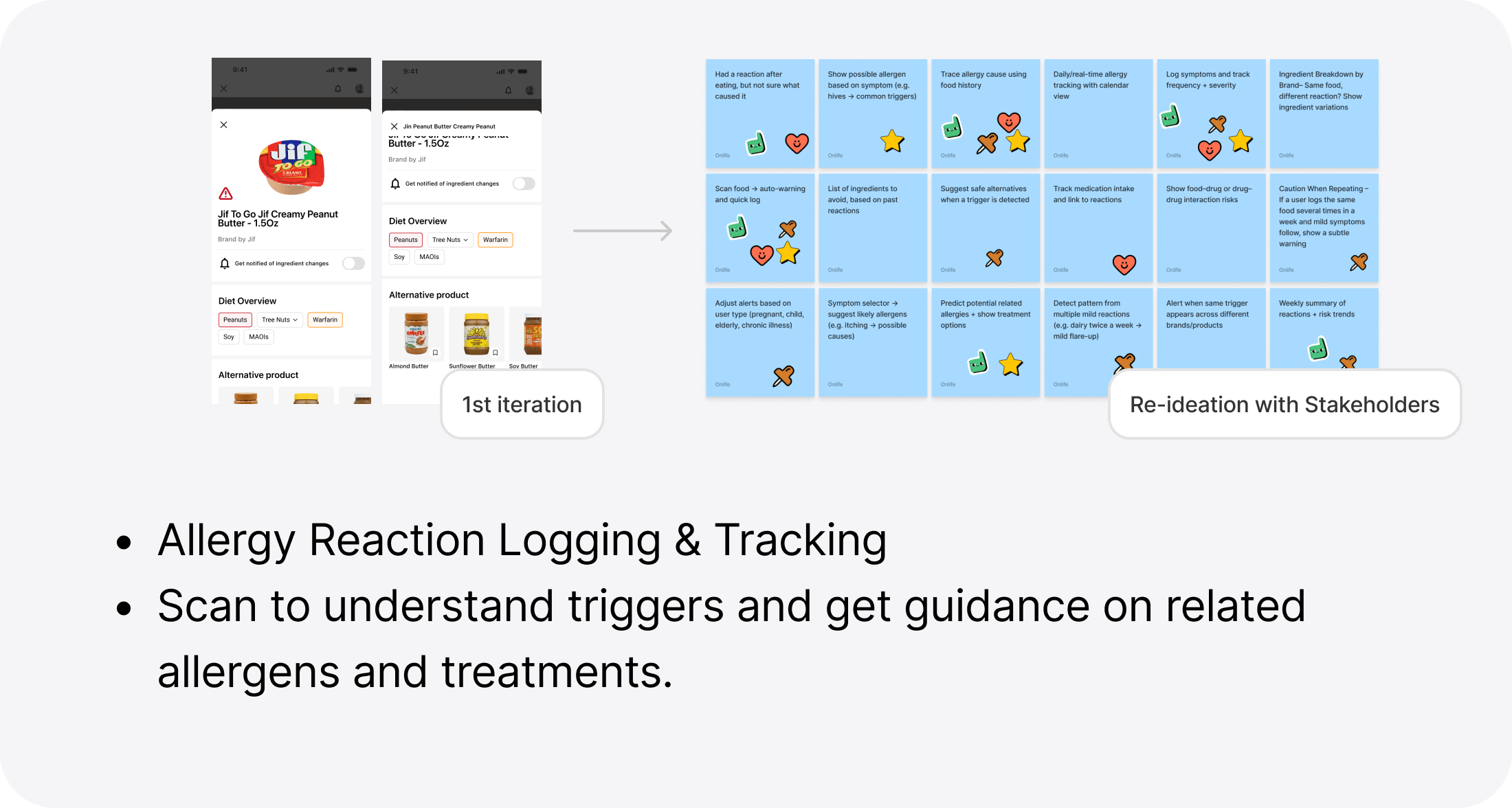
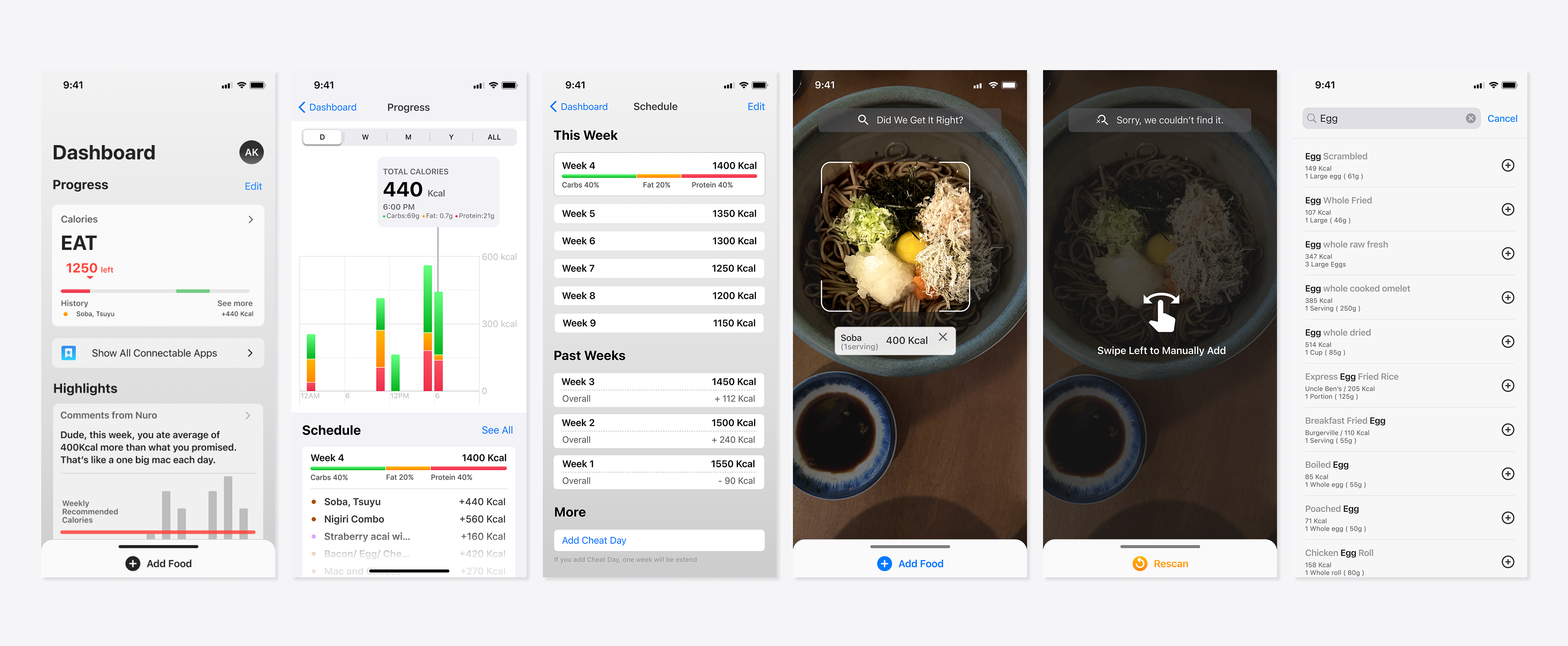
Nutrition MVP and information structure
Nutrition was already in refinement when the additional app was requested. I preserved its existing structure and connected the apps through Connection App rather than redesigning Nutrition from scratch.
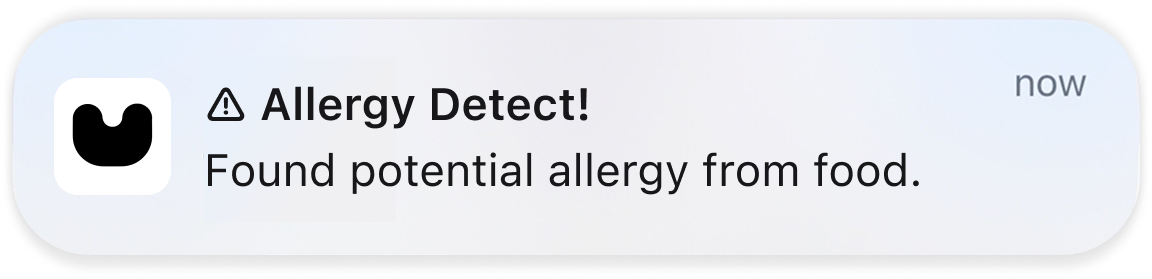
The intended alert appears during meal logging while the apps remain independently maintainable.
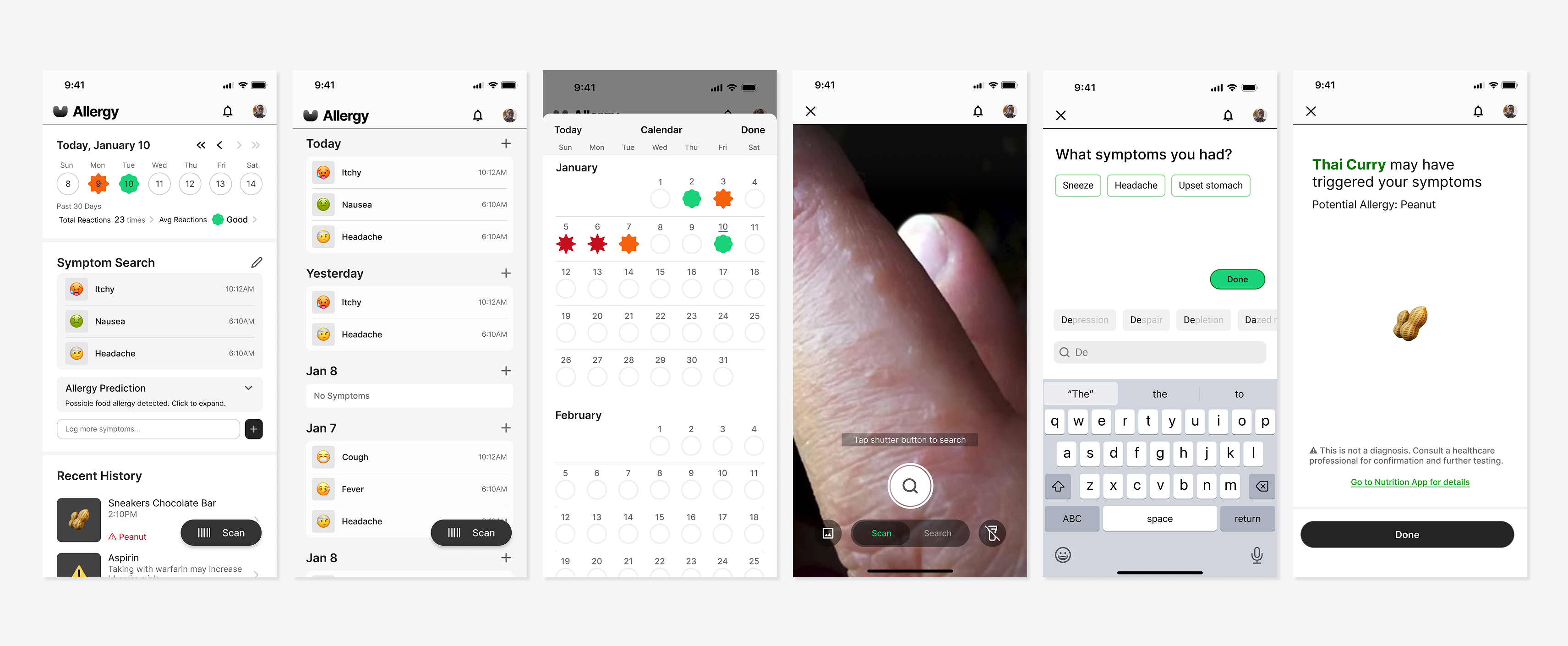
Allergy MVP and information structure
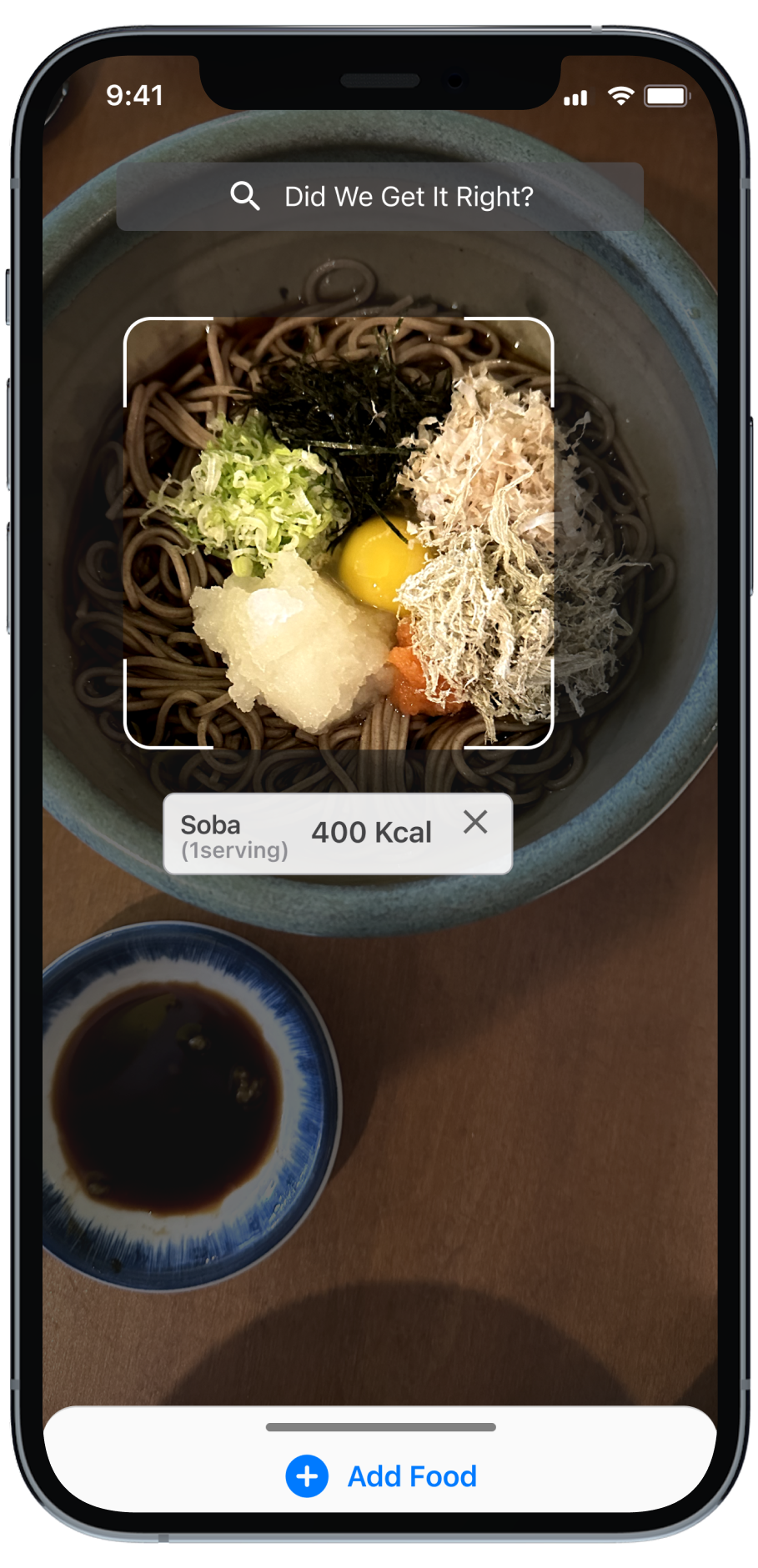
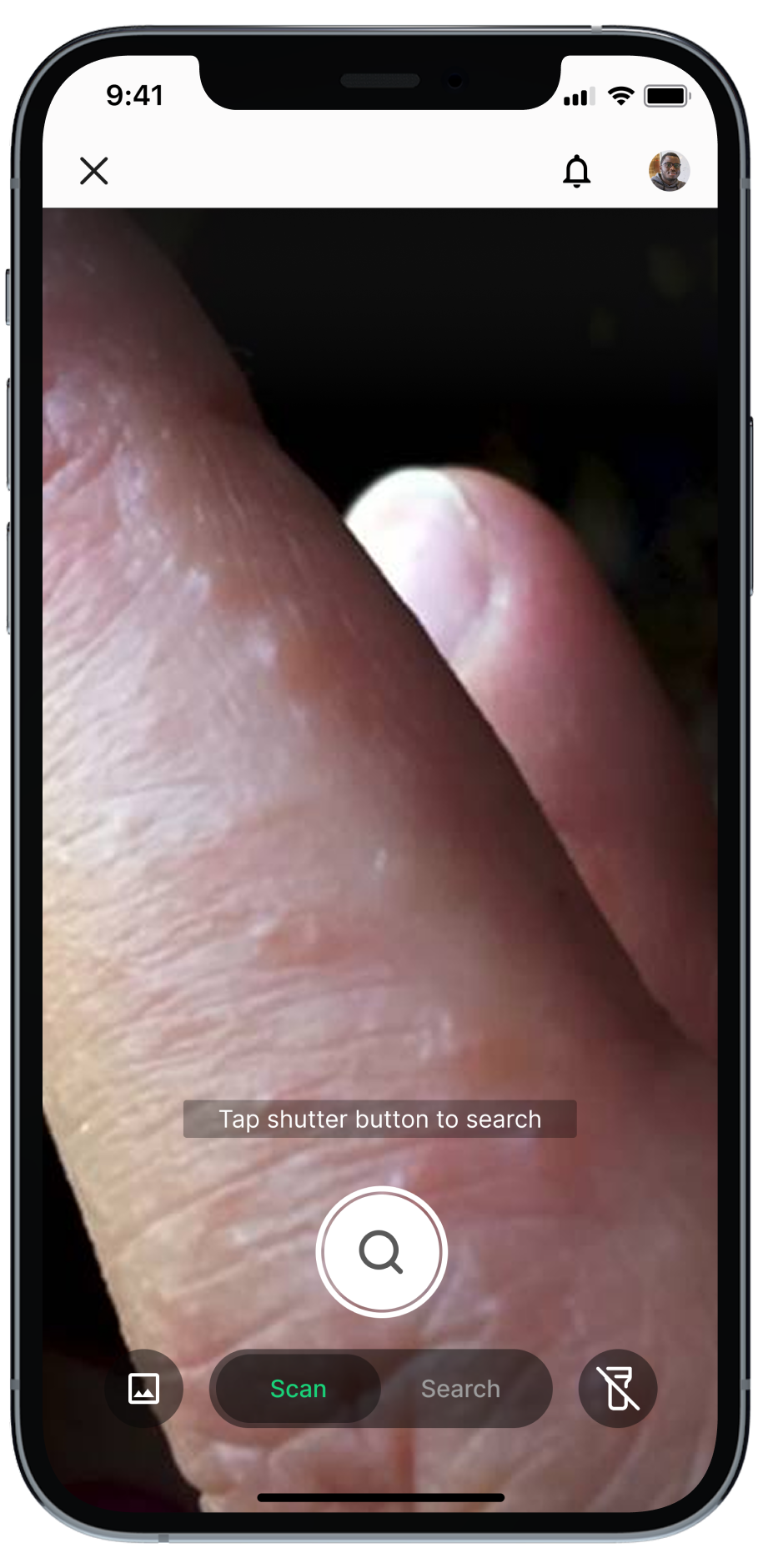
Allergy retains its own tasks and identity. Search and scan flows support recording reactions and reviewing relevant meal history.
The structure allows related data to be used without binding app updates together, and leaves room for other Vita integrations.
Connected task flows
The full original two-path task-flow diagram is retained without substituting a new interpretation.
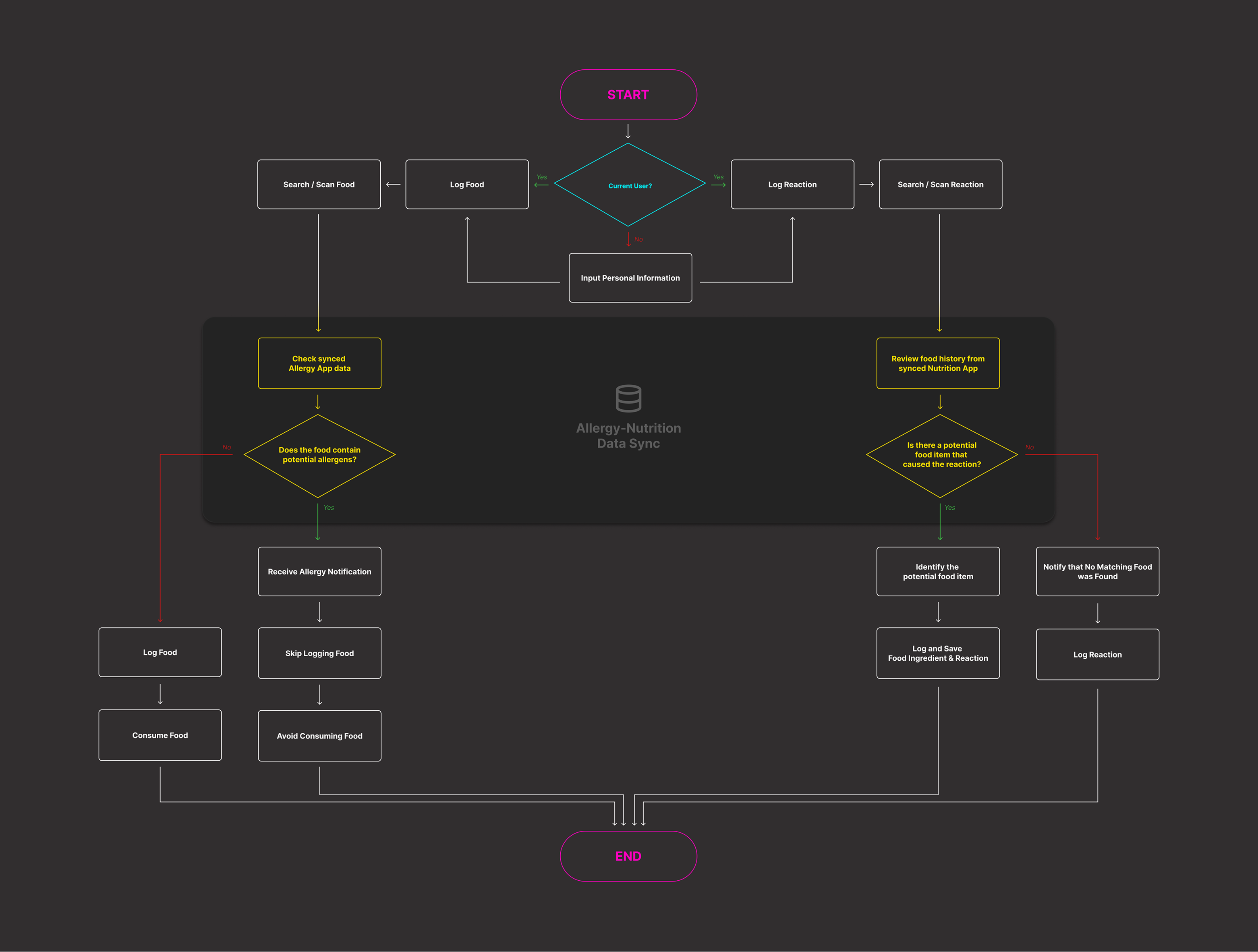
Nutrition to Allergy: meal review and alert
1. Log a meal and review ingredients in Nutrition.
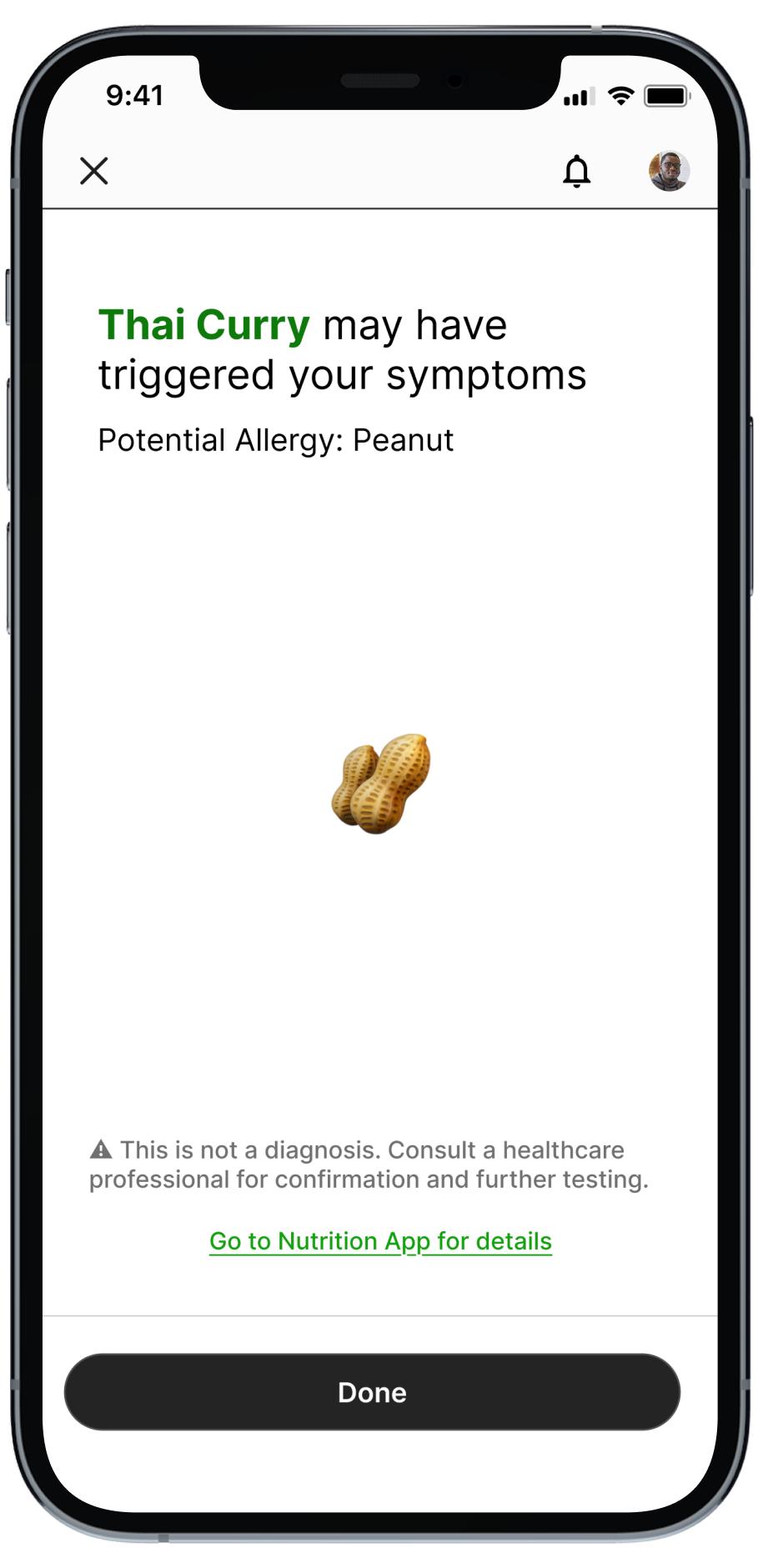
2. The designed connection checks meal information against recorded allergy history.
3. An intended alert appears before the meal is consumed. The source frames this as prevention; the portfolio does not assert demonstrated allergy prevention or medical efficacy.
Allergy to Nutrition: symptoms and meal history
1. Search or record symptoms in Allergy.
2. The designed flow reviews recent meal records for possible correlations.
3. Suggested food associations are returned to Allergy records. A correlation or designed insight does not establish a medical cause.
Light and dark themes
Nutrition sprint four delivered both light and dark themes. Original Nutrition design artifacts are retained in the preceding sections and the original mobile deck; no newly fabricated dark screens are presented.
Take away and evidence limits
This work developed an approach to integrating a new feature set while preserving each app’s independence and maintainable structure.
Continuous stakeholder communication and iterative feedback supported clearer design intent and ongoing refinement beyond visual polish.
Design artifacts and source-described testing are the evidence available. Release status, engineering acceptance, numerical outcomes and clinical effectiveness are not established.