Lyotic · AI-native design system
Keep the same work understandable as its interface changes.
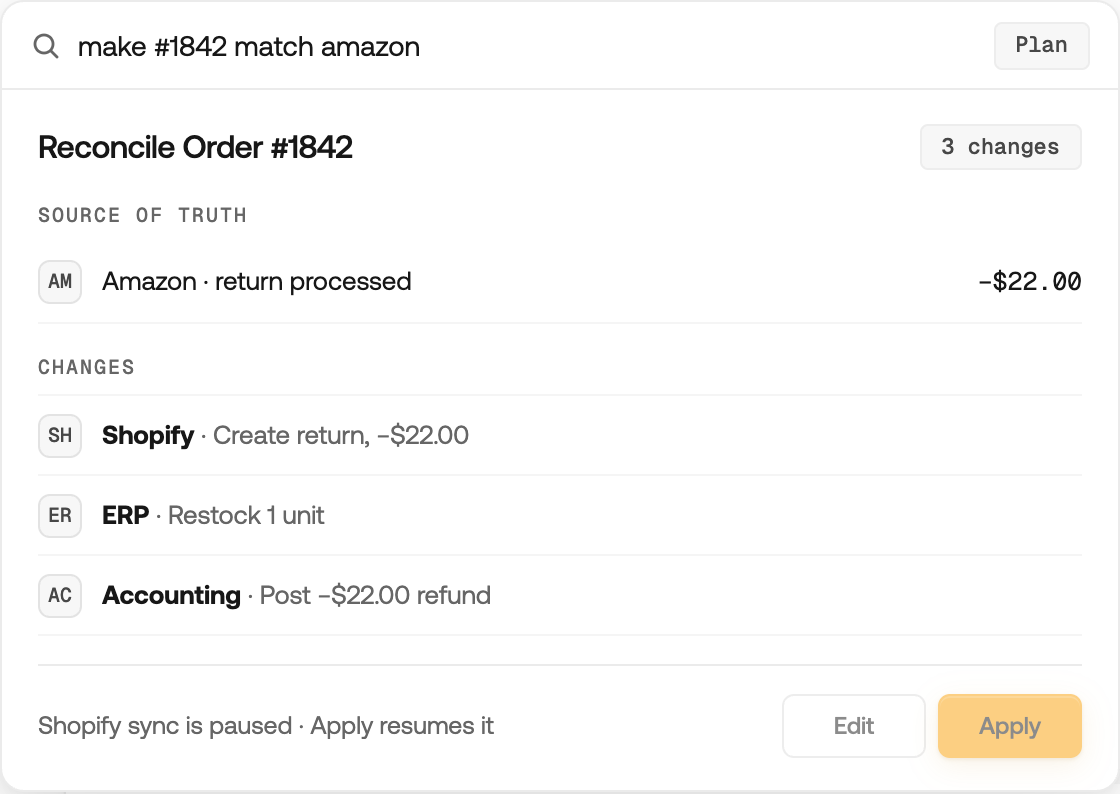
Actual Lyotic CommandBar implementation, shown in its Systead reconciliation reference state.
Lyotic is the AI-native interaction system. Systead is its reference product for reconciling business records across spreadsheets, ERP and marketplaces. Evidence, authority, execution, verification and recovery remain visible as the same work changes form.
Different tools can describe the same business reality with different records and field meanings. A compact status must preserve those relationships rather than erase the disagreement.
A tool call succeeding is not proof that the destination holds the intended result. Lyotic distinguishes execution from host readback and verification.
Systead: the work creates the interface
The existing Systead film shows inventory editing, schema matching, document sorting, mismatch inspection, identity linking and a command-driven reconciliation plan. Spreadsheets, ERP and marketplace records remain representations of the same business work.
The film is an interaction and motion reference. Its cinematic shortcuts are not a production execution contract or evidence of live adoption.
Systead ERP, order and inventory reconciliation
Systead is the application reference: inventory quantities, order records and return evidence move across spreadsheets, ERP, Shopify, Amazon and accounting. A persistent Work Case retains the same business objects, source observations, evidence and decisions. Field meanings and freshness matter before different records are treated as a conflict.
Epistemic, authority, execution and verification states move independently. Approved and outcome-unknown can coexist; applied does not mean verified.
Review the actual change before execution
The reconciliation plan shows targets, proposed changes, preserved values and scope. Approval belongs to that version of the plan, and authority must still be valid when an action executes.
Each destination keeps its own execution result. A partial failure or unknown outcome stays visible rather than becoming a single green completion status.
Earn a resolved summary through host verification
Verified Collapse represents work as resolved only after host readback confirms the intended result within its scope. A person may fold an unresolved view at any time; pending decisions and unknown outcomes remain visible in the compact form.
Recovery retains the same work identity, execution history and outstanding obligations. Changed permissions, mappings or external data can reopen verification. Local fixtures test these contracts; live host integration and measured supervision outcomes remain unproven.